
What Is Slow Living? (And How to Start)
There’s a quiet shift happening lately.
People are craving slower mornings, less screen time, more time outdoors, home-cooked meals, long walks, books instead of notifications, and simple rituals that help life feel softer again. After years of rushing, multitasking, consuming, and constantly being connected, many of us are beginning to realise that faster doesn’t always mean better.
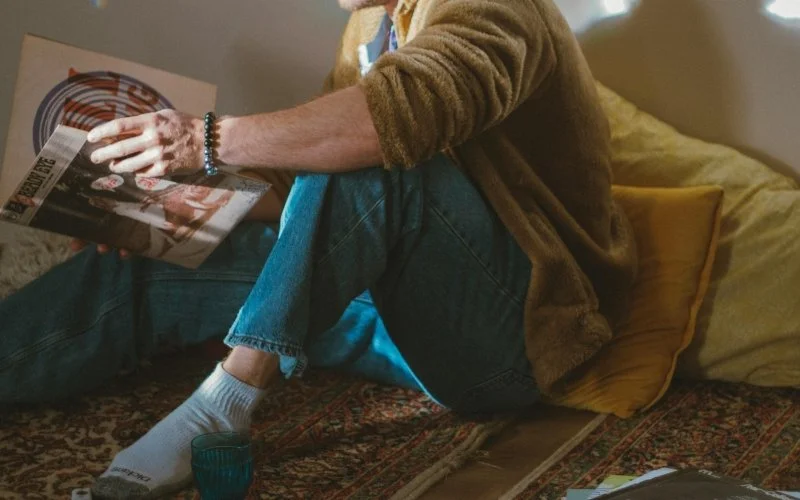
That’s where slow living comes in.
Despite the name, slow living isn’t about doing everything slowly or escaping modern life completely. It’s not about perfection, moving to the countryside, throwing your phone away, or waking up at 5am to meditate for an hour every day. It’s much gentler than that.
Slow living is really about intention.
It’s choosing to live in a way that feels more present, connected, and meaningful instead of constantly rushing through life on autopilot. It’s learning to notice your days again instead of simply trying to get through them.
At its core, slow living asks one simple question:
“What actually matters to me?”
And once you begin answering that honestly, everything else starts to shift a little too.
For some people, slow living looks like spending less time online and more time outside. For others, it’s cooking dinner at home, simplifying their schedule, creating small daily rituals, or learning how to rest without guilt. Sometimes it’s as simple as drinking your morning coffee without scrolling your phone at the same time.
The beauty of slow living is that it doesn’t have to look the same for everyone.
You don’t need a perfectly aesthetic home or a completely stress-free life to begin. You don’t need expensive wellness products or a picture-perfect routine. Slow living isn’t another trend to perform well. In fact, it’s often about stepping away from performative living altogether.
It’s about creating more space for the things that make you feel grounded, nourished, and human.
Because the truth is, many of us have become disconnected from ourselves without even realising it. We spend our days overstimulated, overcommitted, and constantly distracted. We scroll while eating, watch TV while replying to messages, listen to podcasts while working, and fall asleep with our minds still buzzing from everything we consumed that day.
Our nervous systems rarely get a moment to fully exhale.
Slow living invites us to soften that.
To create moments of stillness again.
To pay attention.
To be where we are.
And often, the smallest moments become the most meaningful ones.
Opening the windows in the morning and letting fresh air into the house.
Lighting a candle while making dinner.
Taking your time with your skincare instead of rushing through it.
Walking barefoot on the grass.
Reading before bed instead of doom scrolling.
Watching the sunset properly.
Having conversations without checking your phone halfway through.
These moments may seem ordinary, but they’re often the moments that bring us back to ourselves.
Slow living also teaches us that productivity isn’t the only thing that gives life value.

You are allowed to rest.
You are allowed to have quiet hobbies.
You are allowed to spend time doing things simply because they make you feel calm, connected, or joyful.
Not everything needs to become a side hustle.
Not every moment needs to be optimised.
There’s so much beauty in slowing down enough to fully experience your own life instead of constantly trying to improve it.
If you’re wanting to embrace slow living but aren’t sure where to start, begin gently.
You don’t need to change your whole life overnight. In fact, slow living probably wouldn’t want you to.
Start by noticing the moments in your day that already make you feel grounded. Maybe it’s your morning coffee, watering your plants, journalling before bed, going for walks, cooking, reading, surfing, gardening, spending time with family, or sitting quietly outside in the sun for a few minutes.
Those moments matter.
Then slowly create more space for them.
You could start leaving your phone in another room for part of the evening. You could take a slower morning on weekends instead of rushing into productivity. You could light incense while cleaning your home, listen to music instead of scrolling, visit the ocean more often, or create small rituals around the beginning and end of your day.
The goal isn’t to create a perfect slow life.
The goal is simply to feel more connected to the life you already have.
And perhaps the most beautiful part of slow living is that it reminds us we don’t actually need as much as we’ve been taught we do.
We don’t need constant stimulation to feel fulfilled.
We don’t need to consume endlessly to feel happy.
We don’t need to rush through our lives to prove our worth.
Sometimes the most meaningful things are also the simplest.
A warm cup of tea.
A quiet home.
A long conversation.
Ocean air.
A good book.
Fresh sheets.
Cooking for people you love.
An afternoon without notifications.
A moment of stillness in the middle of a busy day.
Slow living isn’t about escaping life.
It’s about returning to it.
Returning to presence.
Returning to intention.
Returning to yourself.
And maybe that’s something we all need a little more of right now.